
How to Choose Exterior House Paint
I’ve painted a couple of homes in my life and you probably know it is one of the most intimidating home projects out there. It is also one of the most rewarding. The right color can completely transform a home, downplay oddities, or bring out its very best side. It’s also a super important way to maintain and keep a house in good shape. It feel like your decision is just on full display for the world to see – so much pressure! That’s why I’m breaking it all down here. I’ll cover house paint types, sheens, brands, warranties, application methods, and what to look out for when you choose exterior house paint.
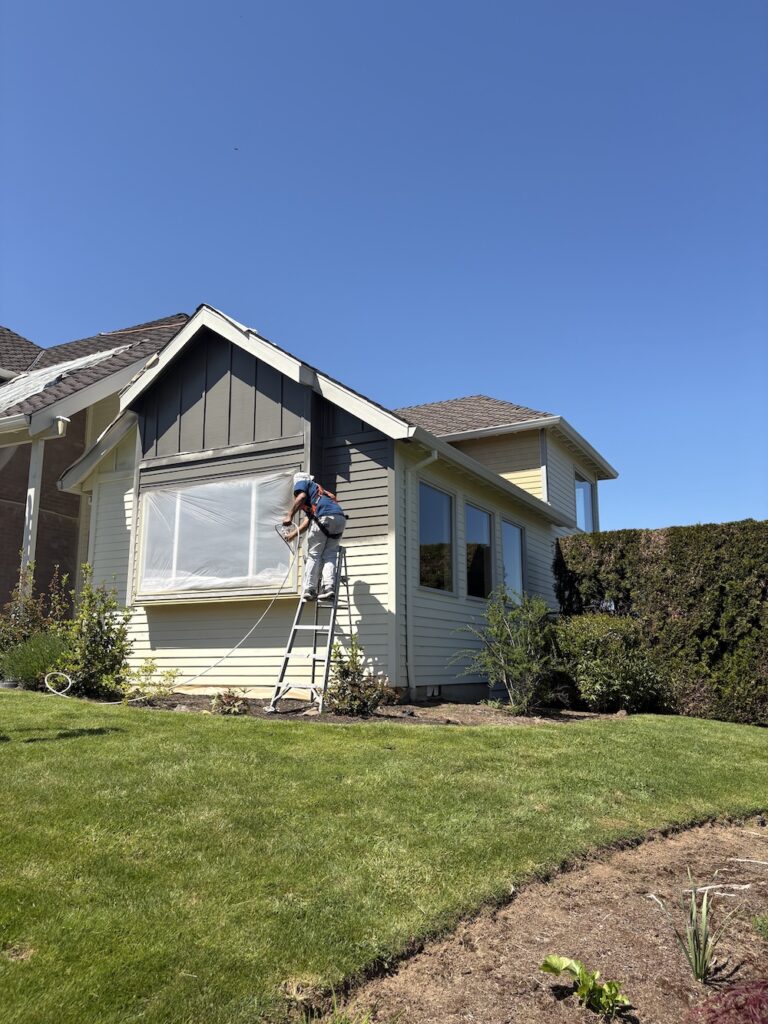
My recent house painting project was part of a larger, more complex home update of new windows, siding, and trim. The project was exhausting but necessary after discovering some faulty window installation. Plus, the previous paint job was horrible – it was splotchy, uneven, poorly sealed, and a weak inconsistent color. I made it my mission to repair everything with the best and smartest materials I could, that included paint.
Exterior House Paint Types
| Paint Type | Description |
|---|---|
| Acrylic Latex Paint | The most popular exterior paint for durability, flexibility, color retention, and resistance to cracking and peeling. Ideal for most siding materials. |
| Water-Based Latex Paint | Easy to apply, fast drying, and low in VOCs. A budget-friendly option but less durable than 100% acrylic. |
| Oil-Based (Alkyd) Paint | Creates a hard, durable finish. Best for doors, trim, and metal surfaces, though it takes longer to dry and requires mineral spirits for cleanup. |
| Elastomeric Paint | A thick, flexible coating designed to provide superior waterproofing. Commonly used on stucco, masonry, and concrete surfaces. |
| Mineral/Silicate Paint | A breathable, long-lasting paint that bonds with masonry surfaces like brick and stone. It resists peeling and fading while allowing moisture to escape. |

The Right Exterior House Paint Sheen
Choosing the right house paint goes far beyond just color – it’s so important to get the sheen level right. I know this from experience, as in I learned the hard way. While it’s true that higher sheen levels are easy to clean, paint manufacturers have come a long way and matte, satin or eggshell finish can be just as durable. Going with too much sheen can actually emphasize home imperfections and create a less than high end final result.
For this house project, I used Rodda-Miller’s Velvet sheen which is comparable to an eggshell on the main siding. I used a satin finish for the trim and fascia while I opted for the semi-gloss on the front door. W
| Paint Finish | Description | Best For |
|---|---|---|
| Flat/Matte | Little to no sheen, giving a smooth, modern appearance. Hides surface imperfections but can be more difficult to clean and may show dirt more easily | Older homes, large siding surfaces, brick, stucco, and homes with textured exteriors. |
| Eggshell | Also called low-lustre and has a soft, subtle sheen. Hides minor imperfections while providing better moisture and dirt resistance than flat paint. | Wood siding, fiber cement, and most exterior walls. |
| Satin | One of the most popular exterior paint finishes because it combines a slight sheen with durability. Easier to clean than flatter finishes and stands up well to weather, making it a versatile choice for most homes. | Siding, trim, shutters, and exterior doors. |
| Semi-Gloss | Has a noticeable shine and creates a hard, durable finish that resists moisture, mildew, and frequent cleaning. It highlights architectural details but also makes surface flaws more visible. | Trim, fascia, window frames, doors, railings, and garage doors. |
| Gloss/High-Gloss | Produces a reflective, polished finish that is extremely durable and highly washable. Offers maximum protection, also emphasizes every imperfection | Front doors, decorative trim, shutters, metal railings, and accent features. |
House Exterior Paint for Different Climates
Considering how climate affects exterior house paint was relatively new to me. I just figured it was all the same. Even though both of my recent homes were in the same ZIP code, one was tucked among trees in the country while the other sat in a sunny, south-facing neighborhood exposed to the wind. Those differences had a significant impact on the paint colors I chose and how they looked once applied.
For example, in the Pacific Northwest, you’re dealing with sustained moisture, temperature swings, UV exposure in summer, and freeze-thaw cycles. A paint formulated for dry climates will not work as well here here. Looking for paint that has mildew resistance, flexibility, and waterproofing was super important.
I worked with Rodda Miller and they explained how there really is a difference in paint types, brands, and quality. I used the Rodda Miller Ultimate II paint, which is an extremely high quality and designed and formulated for the Pacific Northwest climate in mind. They started in the PNW so I figure they know what they are talking about!
House Paint Based on Climate
| Climate | Characteristics | Things to Consider |
|---|---|---|
| Pacific Northwest | Frequent rain, overcast skies, lush greenery, moderate temperatures | Soft warm neutrals help offset gray skies, while durable mildew-resistant paint is important due to moisture. |
| High Desert | Intense sun, low humidity, large temperature swings | UV-resistant paints help reduce fading. Mid-tone colors often age better than very dark shades. |
| Coastal | Salt air, high humidity, strong sun, ocean breezes | Choose paints formulated for salt and moisture exposure. Lighter colors reflect sunlight and stay cooler. |
| Northeast & East Coast | Four distinct seasons, snow, rain, humid summers | Durable acrylic paints withstand freeze-thaw cycles. Traditional colors often complement historic architecture. |
| Southern & Hot Climates | Long, hot summers, intense UV exposure | Lighter colors reflect heat, helping reduce surface temperatures and minimizing fading from prolonged sun exposure. |

Don’t Underestimate Paint Prep
One thing I’ve learned over time is it doesn’t matter how pretty the color is, skipping the paint prep only means a poor quality result for an exterior house paint project. Maybe not right away, but even 1-2 years later, the lack of caulking or power washing becomes really evident. The longest lasting paint jobs aren’t always about the most expensive paint, it’s about doing it right. A professional crew should always:
- Pressure wash the entire exterior to remove chalk, mildew, and failing paint
- Scrape and sand any peeling or flaking areas
- Caulk all gaps — around windows, trim, corners, and material transitions
- Prime new or repaired surfaces — especially new wood
- Mask and protect everything that shouldn’t be painted
If a contractor skips these steps to save time or money, your paint will show it within a few years. Ask specifically what’s included in prep before any work begins.
Look for a Paint Warranty
- Workmanship warranty: Covers the application itself — peeling, cracking, or adhesion failure from improper application. Reputable painters offer this; be wary of anyone who doesn’t.
- Product warranty: The paint manufacturer’s warranty. Premium paints carry warranties of 15–25 years for premium exterior products.
- Written scope of work: Before signing, make sure the proposal details prep steps, number of coats, specific products, and what the warranty covers. Verbal promises don’t hold up.
I chose Fitzpatrick Painting specifically because they check all of these boxes. They offered a detailed prep checklist and backed their work with a lifetime warranty.

Choosing Exterior House Paint Colors
When it comes to choosing an exterior house paint color, there are lots of factors to consider. The top of the list includes the climate and fixed architectural elements like style, roof, stone, or brick. Another important factor is the direction the house faces. Also, deciding between light and dark colors longer term implications. And finally color can make a big difference for resale value.
These are all things I factored in when deciding on how to approach this house paint project. My house is Northwest Contemporary, facing south and gets exposed to a lot of elements like winds and rain being up on a hill. I also know I’ll be selling and downsizing soon so I wanted to keep that in mind. I went with colors directly from Rodda Miller Northwest Color Collection, which keeps things true to PNW style.
Many paint brands create color palettes for specific regions and architectural styles, this is not just marketing, this can be really helpful as you try to get things consistent. Use the chart below to help factor in all the paint details with making your choice:
Factors When Choosing House Paint
| Paint Factor | Why It Matters | Tips |
|---|---|---|
| Climate | Affects heat absorption, fading, and the lifespan of exterior paint | Lighter colors reflect more sunlight and stay cooler, while darker colors absorb more heat. |
| Architectural Style | Paint colors should complement your home’s design and architectural details | Choose colors that fit the style of the home, whether it’s Craftsman, Colonial, Modern, or Farmhouse. |
| Roof Color | If the roof is staying for awhile, it’s important to consider | Match the paint’s undertones to your roof for a cohesive exterior. |
| Stone or Brick | Bricks and stone have color undertones | Pull paint colors from the undertones in the stone or brick rather than trying to match the dominant color. |
| House Orientation | Natural light changes how paint colors appear throughout the day | North facing homes make paint colors appear darker, cooler, and grayer. South and west facing homes receive warmer, direct sunlight that can make colors appear brighter, warmer, and more saturated. |
| Light vs. Dark Colors | Impacts curb appeal, maintenance, heat absorption, and long-term fading | Consider your climate and maintenance preferences in addition to the overall aesthetic. |
| Neighborhood & HOA | Some neighborhoods or HOAs have exterior color requirements. | Check any guidelines before selecting your paint colors. |
| Resale Value | Exterior paint color can influence buyer appeal and perceived home value. | Neutral, timeless colors typically have the broadest appeal and offer the best resale potential. |
Final Thoughts on Choosing Exterior House Paint
Choosing exterior paint can be a lot of work – there is so much to consider. It’s more than just going with a paint color you love. From climate to existing elements and resale value, keep all these things in mind before tackling a house painting project. I hope this guide was helpful – I’m really happy with how this exterior house paint project turned out, it completely transformed the house and also makes it feel more durable and buttoned up. It’s definitely more than just curb appeal.
Be sure to check out the full House Exterior Before and After post to see get the full picture of how it looked before and now after it’s completely painted. Plus, I have more exterior home ideas with Black House Paint Inspiration where I share my last home, which I painted black!


